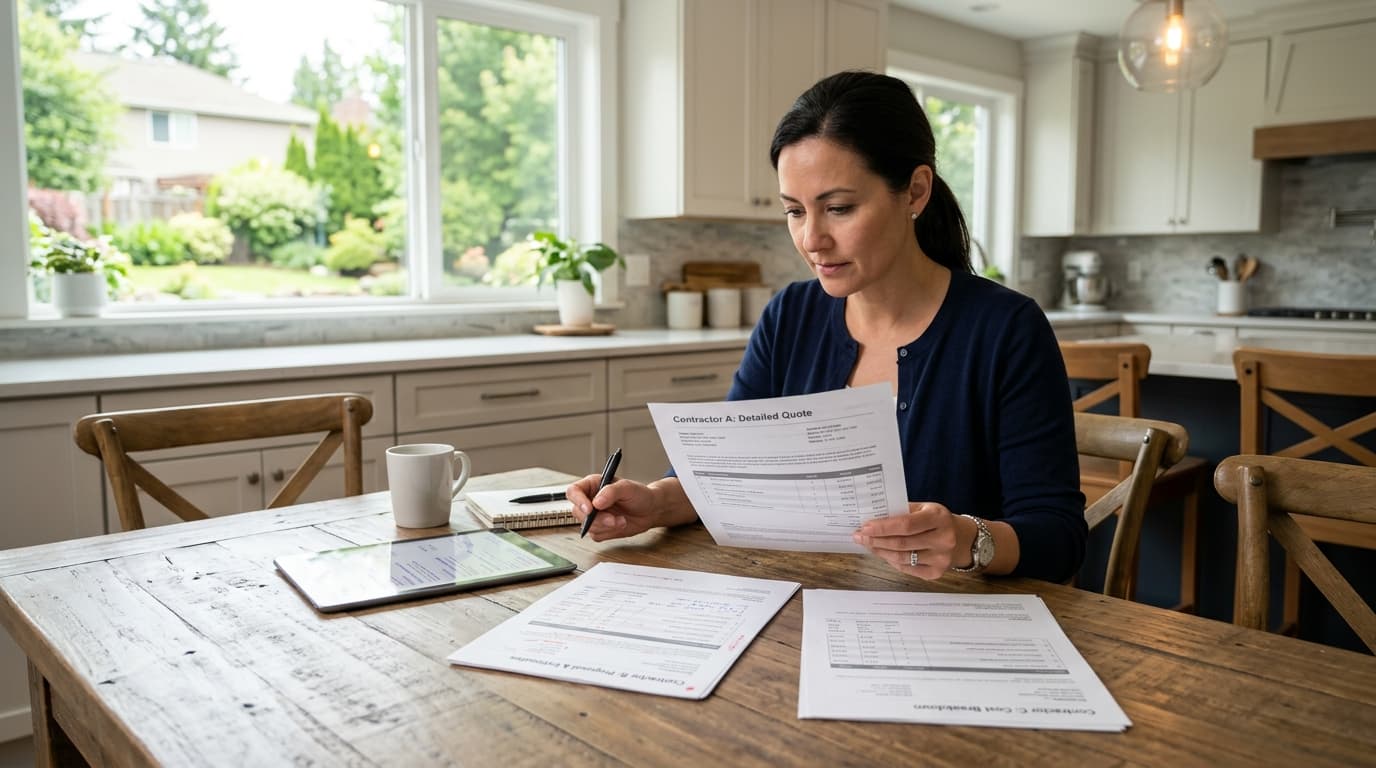
You finally got three quotes back for your kitchen remodel. One is $18,000, one is $26,000, and one is $31,500. Now what?
Most homeowners stare at those numbers and either pick the cheapest out of instinct or the most expensive out of anxiety. Neither approach is reliable. The real work is understanding what's actually inside each quote — because two bids for the "same job" are rarely quoting the same thing.
This guide walks you through how to collect, read, and compare contractor bids in a way that protects your money and helps you pick the right person for the job.
Why Getting Multiple Quotes Matters More Than Ever in 2026
Contractor pricing has never been more variable. Material costs, labor availability, and local market conditions all shift how contractors price work. A quote you received two years ago for a bathroom renovation is essentially useless today.
Getting at least three quotes gives you a real picture of what the market looks like for your specific project. It also gives contractors a reason to sharpen their numbers. When a contractor knows you're comparing bids, they tend to be more precise and more competitive.
And yes, it's completely fine to tell a contractor you're getting multiple quotes. Most experienced contractors expect it. Any contractor who pressures you not to shop around is already showing you a red flag worth noting.
Step 1: Give Every Contractor the Same Scope of Work
The single biggest mistake homeowners make when collecting bids is letting each contractor define the project differently. If one contractor quotes a roof replacement with 30-year architectural shingles and another quotes 3-tab shingles, you're not comparing the same job.
Before you contact anyone, write down a clear scope of work. Include:
- What you want done (specific rooms, systems, or areas)
- Materials you've already chosen or have a preference for
- Any access constraints (HOA rules, tight timelines, shared walls)
- Whether you want permits pulled and by whom
- What is explicitly out of scope
Hand this same document to every contractor. This is the only way to make their quotes comparable.
If a contractor proposes a different approach or material, that's fine — but ask them to provide a second line item showing what your original spec would cost. That way you can still do an apples-to-apples comparison while also considering their suggestion.
Step 2: Know What a Complete Quote Should Include
A solid contractor bid is not just a total number. Before you take any quote seriously, check that it includes all of these:
Itemized line items. Labor and materials should be listed separately, not bundled into a single lump sum. If a contractor gives you one number with no breakdown, ask for the itemization. If they refuse, move on.
Material specifications. Brand names, grades, and quantities matter. "New flooring" is not a specification. "Shaw Floorte Pro 5 Series LVP, 800 sq ft, including underlayment" is a specification.
Payment schedule. Reputable contractors typically ask for a deposit (often 10–30%), payments tied to project milestones, and a final payment at completion. Be cautious of anyone asking for more than 50% upfront.
Timeline. Start date, estimated duration, and any dependencies (like waiting on a permit or a subcontractor).
Warranty terms. What does the contractor warranty, for how long, and what does it cover? Is the manufacturer's warranty on materials separate?
License and insurance. The quote should either include this information or you should have verified it independently before the quote was submitted. You can read more about verifying a contractor's license before you get to the comparison stage.
Step 3: Build a Side-by-Side Comparison
Once you have two or three complete quotes, put them in a table. You can do this in a spreadsheet or on paper. The goal is to see every category next to each other, not flip between PDFs.
Your comparison should include rows for:
- Total project cost
- Labor cost (if itemized)
- Materials cost (if itemized)
- Material brands/grades specified
- Permit costs included or excluded
- Payment schedule structure
- Project start date
- Estimated completion date
- Warranty offered
- License and insurance confirmed
When you lay it out this way, the differences become obvious. A quote that looks cheap at the top line often reveals gaps in the details — missing permit costs, vague material specs, or no warranty.
Step 4: Understand What's Behind a Lowball Quote
A quote that's significantly lower than the others is not automatically a good deal. There are a few common reasons a bid comes in low:
Missing scope. The contractor may have excluded something the others included — like disposal fees, permit costs, or prep work. Ask them directly: "What's not included in this quote that might come up during the project?"
Inferior materials. Lower-grade materials cost less upfront and fail faster. Make sure you're comparing the same specifications before assuming the lower bid uses the same materials.
Underbidding to win the job. Some contractors bid low to get hired, then add change orders once work is underway. This is one of the most common ways homeowners end up paying more than the highest original bid.
No license or insurance. Unlicensed contractors often charge less because they're cutting corners on compliance. If something goes wrong, you have little recourse.
A quote that's 30–40% below the others deserves serious scrutiny, not celebration. Ask the contractor to walk you through their pricing. If they can't explain the gap clearly, that's a meaningful signal.
Step 5: Ask the Right Questions Before You Decide
Once you've reviewed the quotes side by side, you'll likely have a short list of one or two contractors. Before you commit, ask each of them:
- Who will actually be doing the work — you or subcontractors?
- Have you done this type of project recently, and can I see photos or speak to a past client?
- What happens if you discover unexpected issues once work starts?
- How do you handle change orders — in writing, before the work happens?
- What's your process if I'm not satisfied with the result?
The answers tell you a lot about how the working relationship will go. A contractor who gets defensive or vague on these questions is worth reconsidering. For a fuller list, the questions to ask a contractor before hiring guide covers this in more depth.
Step 6: Don't Ignore the Soft Signals
Numbers matter, but so does how a contractor communicates. A few things worth paying attention to:
Responsiveness. Did they show up on time for the estimate? Did they follow up promptly? How a contractor behaves before you hire them is often how they'll behave during the project.
Clarity. Did they explain their quote clearly, or did they seem annoyed by your questions? You'll be working with this person for days or weeks. Communication matters.
Professionalism. Did they have a written contract ready, or are they working off a handshake? Written contracts protect both parties and signal that the contractor takes the work seriously.
If something feels off, trust that instinct. The contractor red flags and warning signs guide covers the specific behaviors worth watching for during the evaluation process.
How to Make This Process Less Painful
Collecting quotes manually is time-consuming. You're coordinating schedules, following up on bids, keeping track of who said what, and trying to compare documents that are formatted completely differently.
Homeplexi is built specifically to take this friction out of the process. You describe your project, and the platform's AI sources licensed, reviewed, and rated contractors in your area. You get competitive bids back in one place, formatted for side-by-side comparison, so you're not juggling spreadsheets and email threads.
Beyond the quote stage, Homeplexi also stores your project documents, tracks progress, and keeps your full home history in one place. That means the quote you accepted, the contract you signed, and the warranty you received are all accessible when you need them later. It's $3 a month, no credit card required to start.
A Quick Reference: Contractor Quote Comparison Checklist
Use this before making a final decision:
- Did I give every contractor the same written scope of work?
- Does each quote include itemized labor and materials?
- Are material specifications (brand, grade, quantity) listed?
- Is the payment schedule milestone-based, not front-loaded?
- Does the quote include permit costs, or are they excluded?
- Have I verified the contractor's license and insurance?
- Did I ask what's not included in the quote?
- Have I compared all quotes in a side-by-side format?
- Did I ask for references or photos of similar past work?
- Is there a written warranty on labor?
If you can check every box, you're in a much stronger position than most homeowners who go through this process.
The Bottom Line
Comparing contractor quotes isn't just about finding the lowest price. It's about understanding what you're actually buying, spotting the gaps before they become expensive surprises, and choosing someone you can work with from start to finish.
The homeowners who get burned usually skipped one of the steps above. They didn't define the scope clearly, they didn't ask what was excluded, or they picked based on price alone without reading the details. The process takes a bit more time upfront, but it saves real money and real stress on the back end.
Get your quotes, lay them out side by side, and ask the hard questions before you sign anything.
Frequently Asked Questions
How many contractor quotes should I get? Three is the standard recommendation. It gives you enough data to understand the market rate for your project without becoming overwhelming to manage. For larger projects (over $10,000), getting four or five quotes is reasonable.
Is it okay to tell a contractor I'm getting multiple quotes? Yes, and most experienced contractors expect it. Being upfront about shopping around is normal and professional. Any contractor who pressures you to decide immediately or discourages you from comparing bids is a red flag.
What should I do if quotes vary wildly in price? Start by checking whether each contractor quoted the same scope of work and the same materials. If the scope is identical and prices still vary significantly, ask the outliers to explain their pricing. A very low bid often has missing line items; a very high bid may include items others excluded.
What's the difference between a quote and an estimate? A quote is a fixed price for a defined scope of work. An estimate is an approximation that may change. Always ask for a written quote, not a verbal estimate, before committing to a contractor.
Can I negotiate a contractor's quote? Yes. Once you have multiple bids, you have real leverage. You can ask a preferred contractor to match a competitor's price, adjust the scope to bring costs down, or negotiate the payment schedule. For practical tactics, the how to negotiate with contractors guide covers this in detail.
What red flags should I watch for in a contractor quote? Watch for lump-sum pricing with no itemization, vague material descriptions, requests for large upfront payments, missing permit costs, and no mention of warranty. Any of these can signal problems down the line.
How do I keep track of quotes and documents after I hire someone? A home management platform like Homeplexi stores your accepted quotes, contracts, project communications, and warranty documents in one place. This is especially useful when you need to reference something months or years later.
Need Professional Help?
Homeplexi connects you with vetted contractors, helps you compare quotes, and manages your entire home improvement project in one place.
Get Started Free →Important Safety Disclaimer
Please read this carefully before following any advice:
- Always prioritize safety: Wear appropriate protective equipment (safety glasses, gloves, etc.) when performing any home maintenance or repair work.
- Know your limits: If you're not confident in your ability to safely complete a task, hire a licensed professional. This is especially important for electrical, gas, plumbing, and structural work.
- Verify all information: The guidance provided here is based on community discussions and general knowledge. Always double-check any advice with multiple reliable sources or a licensed professional.
- Follow local codes: Building codes, electrical codes, and plumbing codes vary by location. Ensure any work complies with your local regulations and obtain necessary permits.
- Turn off power/water/gas: Before working on electrical, plumbing, or gas systems, always shut off the relevant utilities at the source.
- For emergencies: If you have a gas leak, electrical fire, major water leak, or other emergency, evacuate immediately and call emergency services (911) and your utility company.
Liability: Homeplexi provides information for educational purposes only. We are not responsible for any injury, property damage, or losses resulting from following any guidance or advice provided through this platform. Use all information at your own risk.
When in doubt, always consult a licensed, insured professional contractor. Homeplexi can help you find qualified professionals in your area.
Found this helpful? Share with others:
Related Articles
How to Lower Electric Bills: Proven Strategies That Actually Work When Basic Tips Fail
Electric bills climbing higher than expected despite energy-saving efforts
Electrical Outlet Not Working: DIY Fixes vs. When to Call an Electrician
Knowing when it's safe to DIY vs. hiring a pro
Home Repair Priorities: The 4-Quadrant System for Deciding Which Fixes Come First (When You Can't Afford Everything)
Homeowners overwhelmed by multiple needed repairs but limited budget, unsure which repairs to tackle first